

Jewich Relationship Stories
Jewich Relationship Stories
New permanent exhibition in the Museum on the History of Christians and Jews, Schloss Großlaupheim
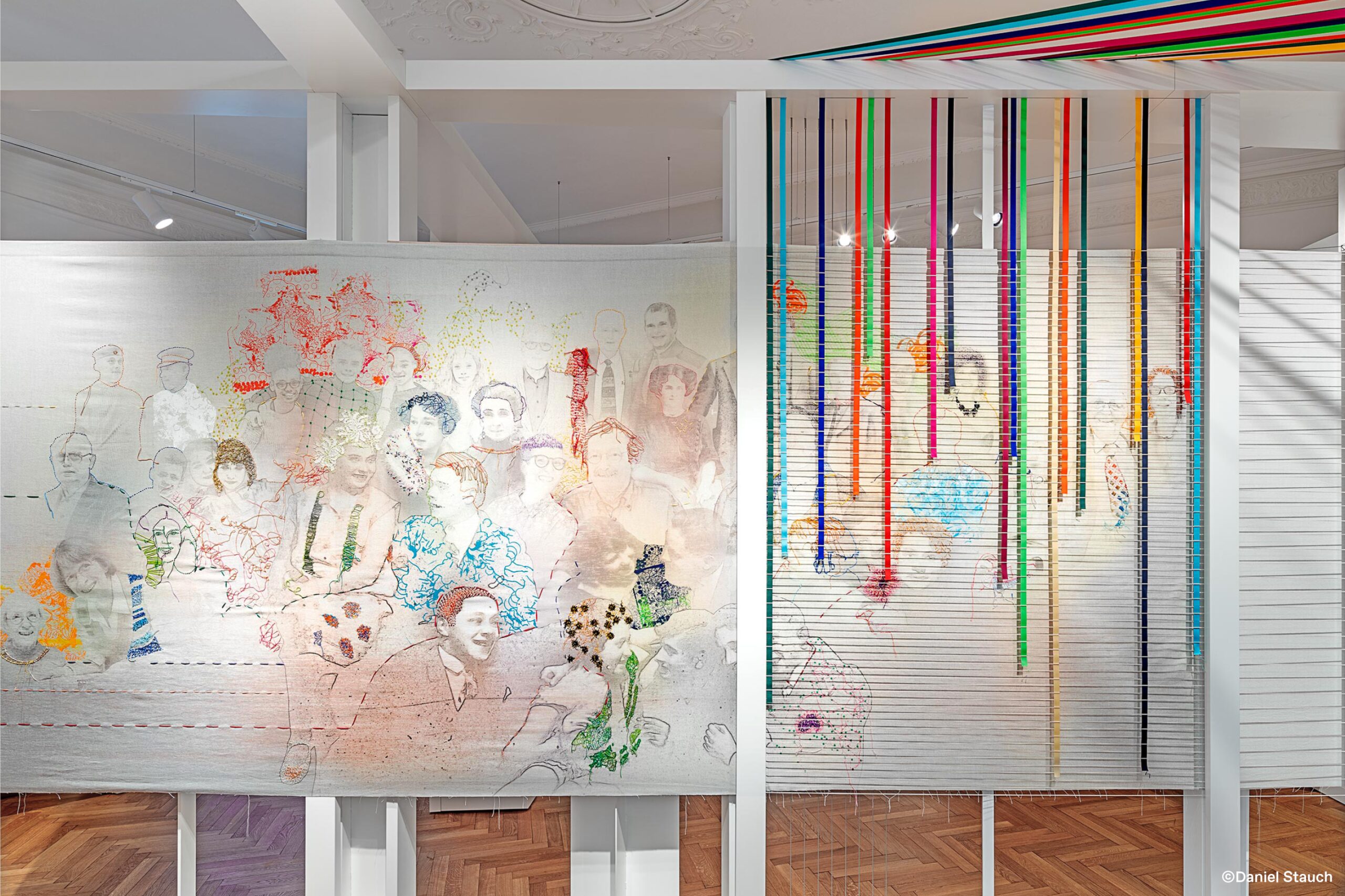
At the beginning are threads! They pull through this exhibition, weave themselves into ribbons and fabrics, ripple open, finally tear and are also taken up again. The German-Jewish history of the city of Laupheim is told in the new permanent exhibition in the castle above the city as a special relationship story in unusually material metaphors with unusual textile techniques. We have created an extensively interwoven and embroidered scenography in the truest sense of the word, which makes the interiors of the castle in particular still tangible as a place of far-reaching relationship history and architecture in all its beauty.

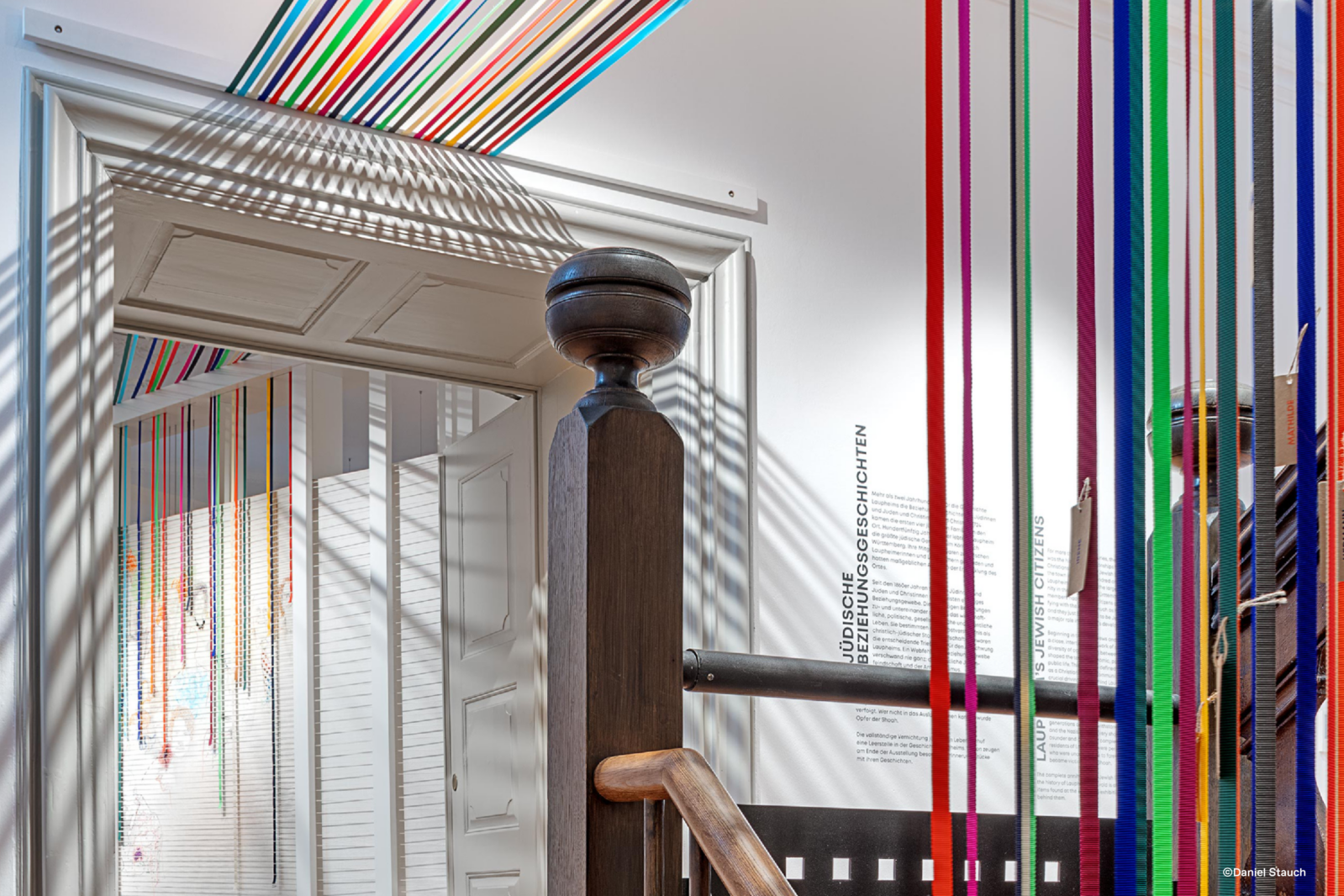

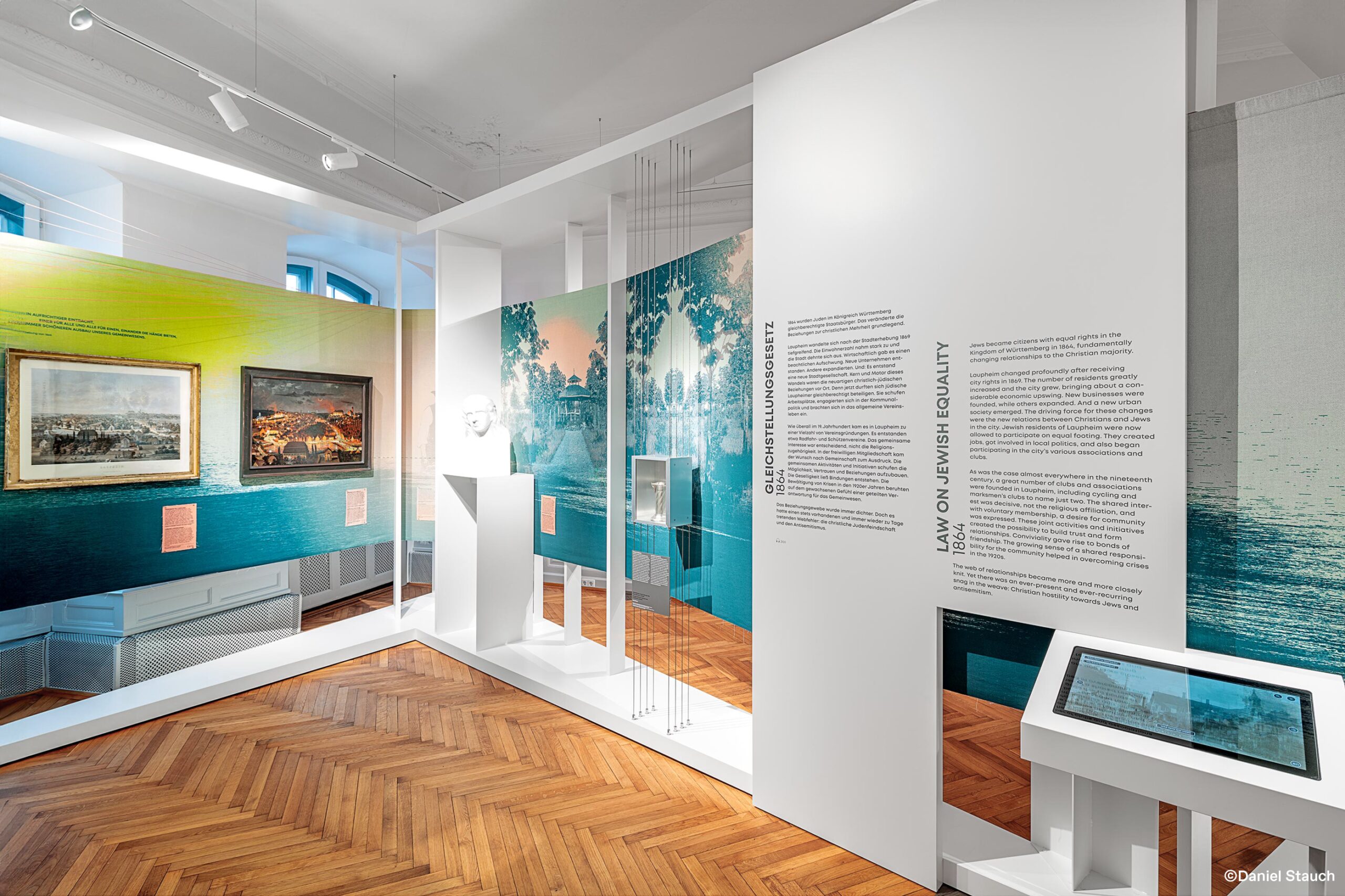
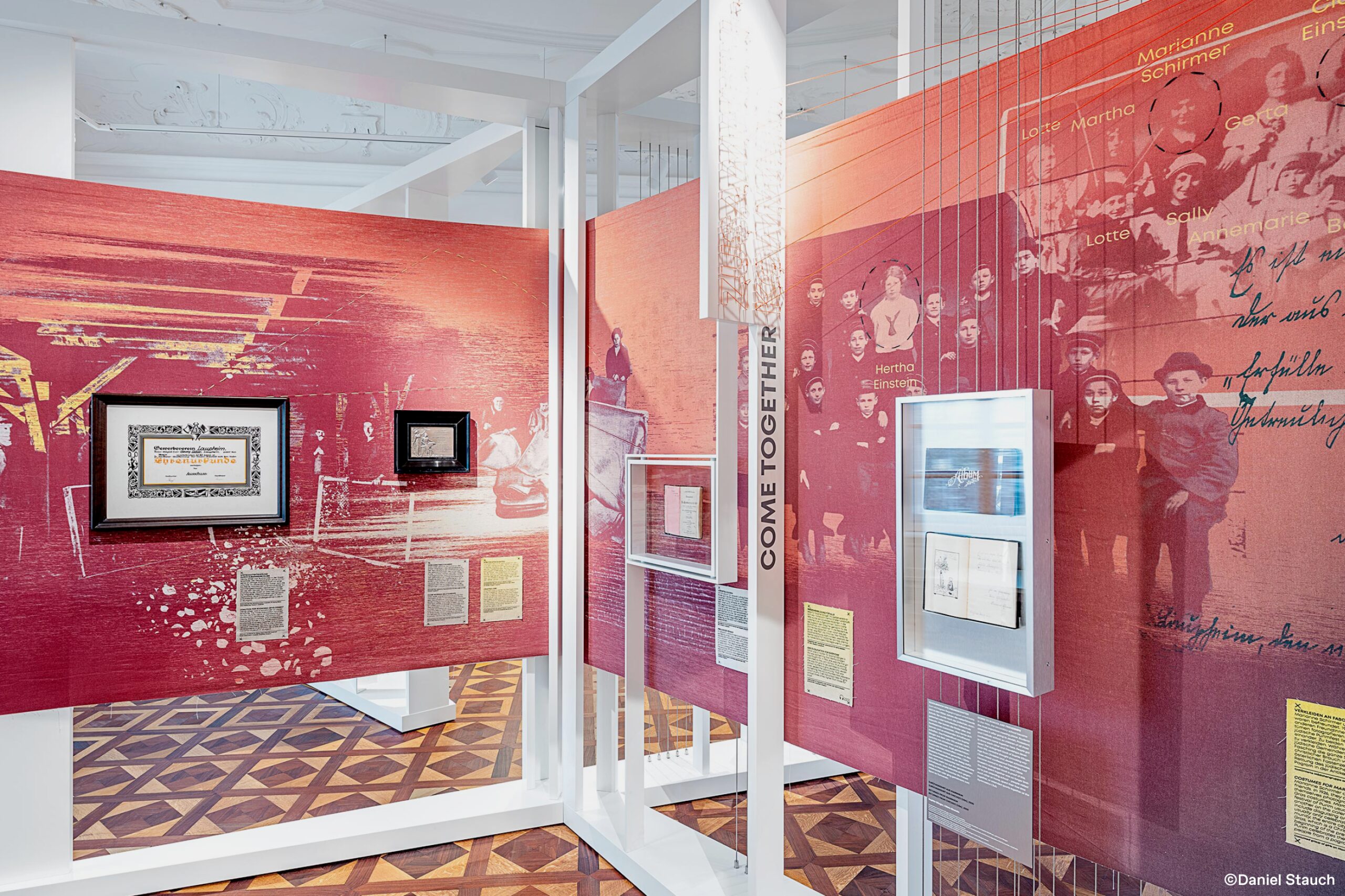
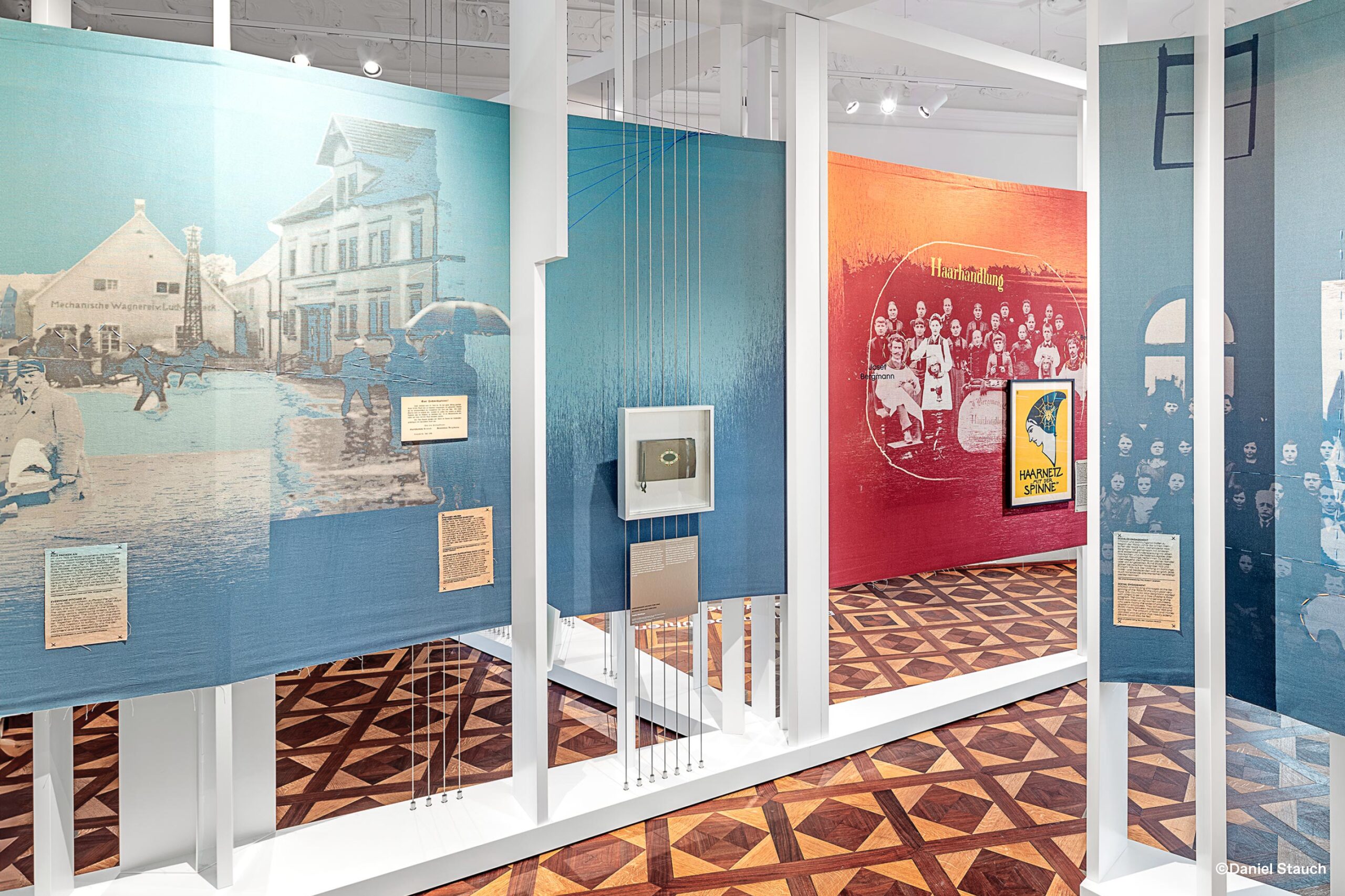
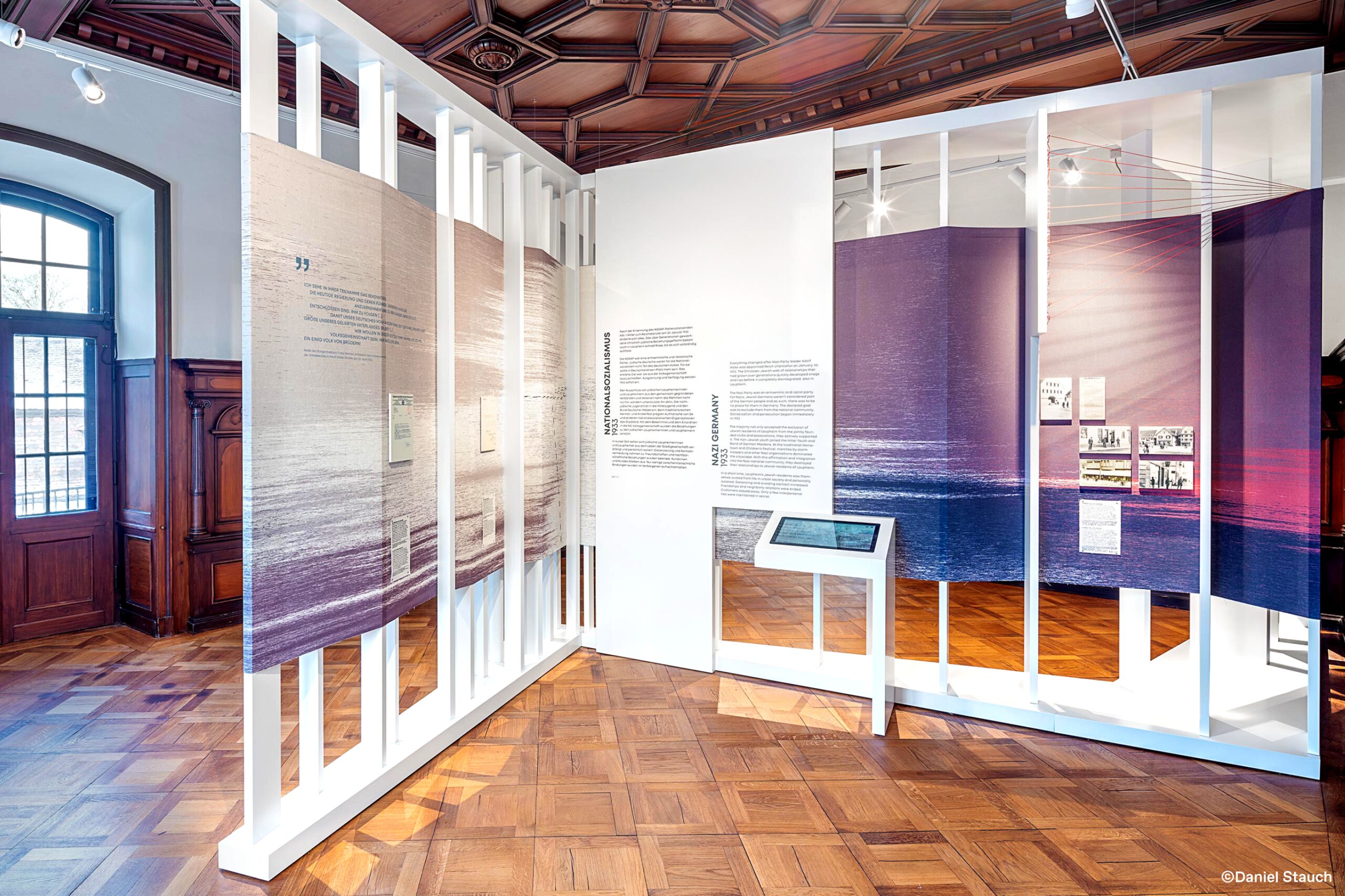
The light, translucent fabrics, the long, colorful ribbons right at the beginning and the most wonderful embroidery attract attention: A large, timely group picture, a truly colorful collage of contemporary and historical citizens of the city, welcomes the visitors. The unusual nail lacing signs, which are constantly woven into the textile surfaces and walls, then guide the visitors through the different topics. The textile walls are both display for the most diverse exhibits and themselves “speaking”, in which they embody the course of the stories through color and fabric qualities. Especially towards the end, the colors in the fabric fade — the anti-Semitic incidents and their symptomatic damage leave their mark. They become black and white gray until they are completely over.


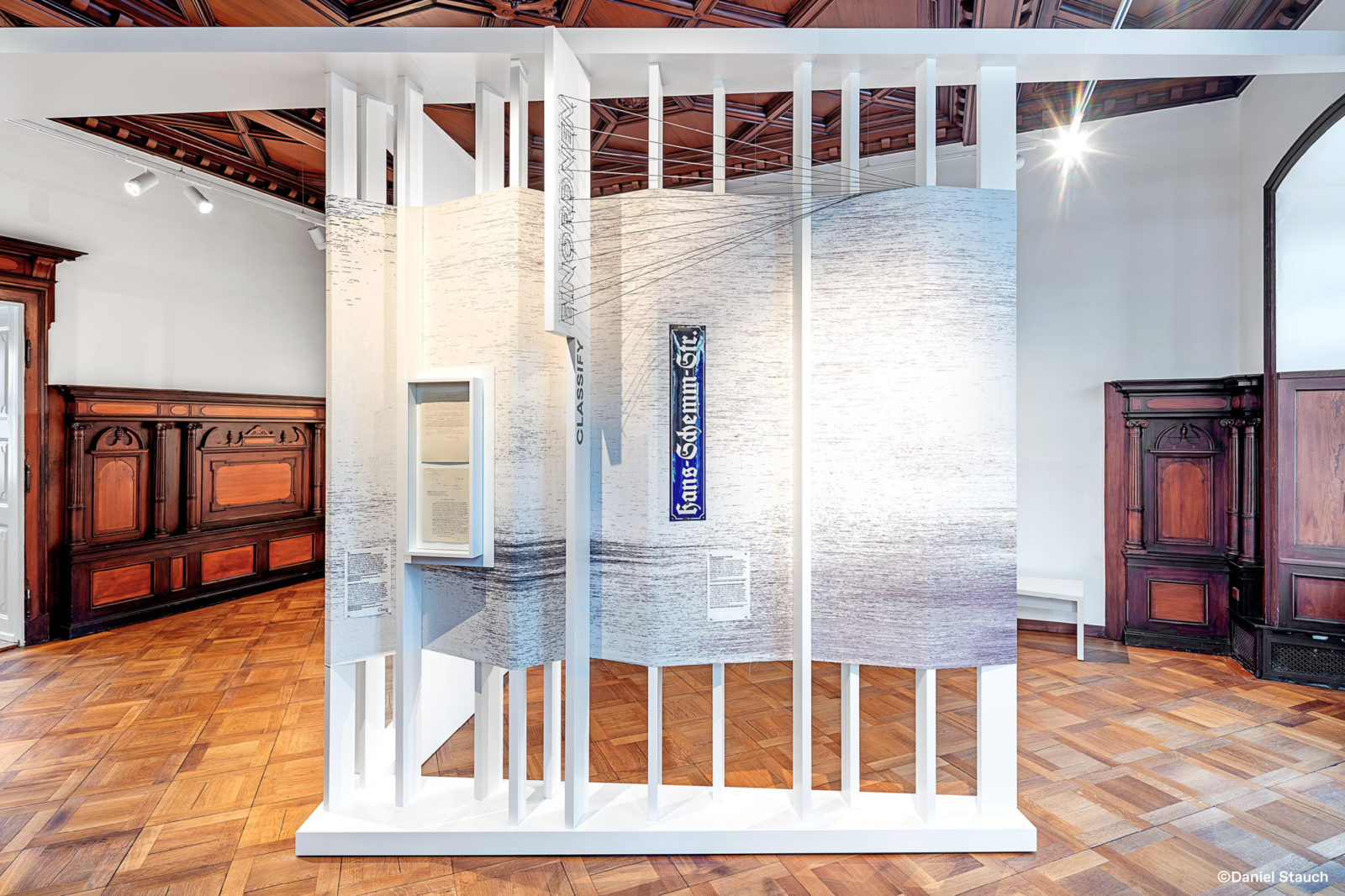
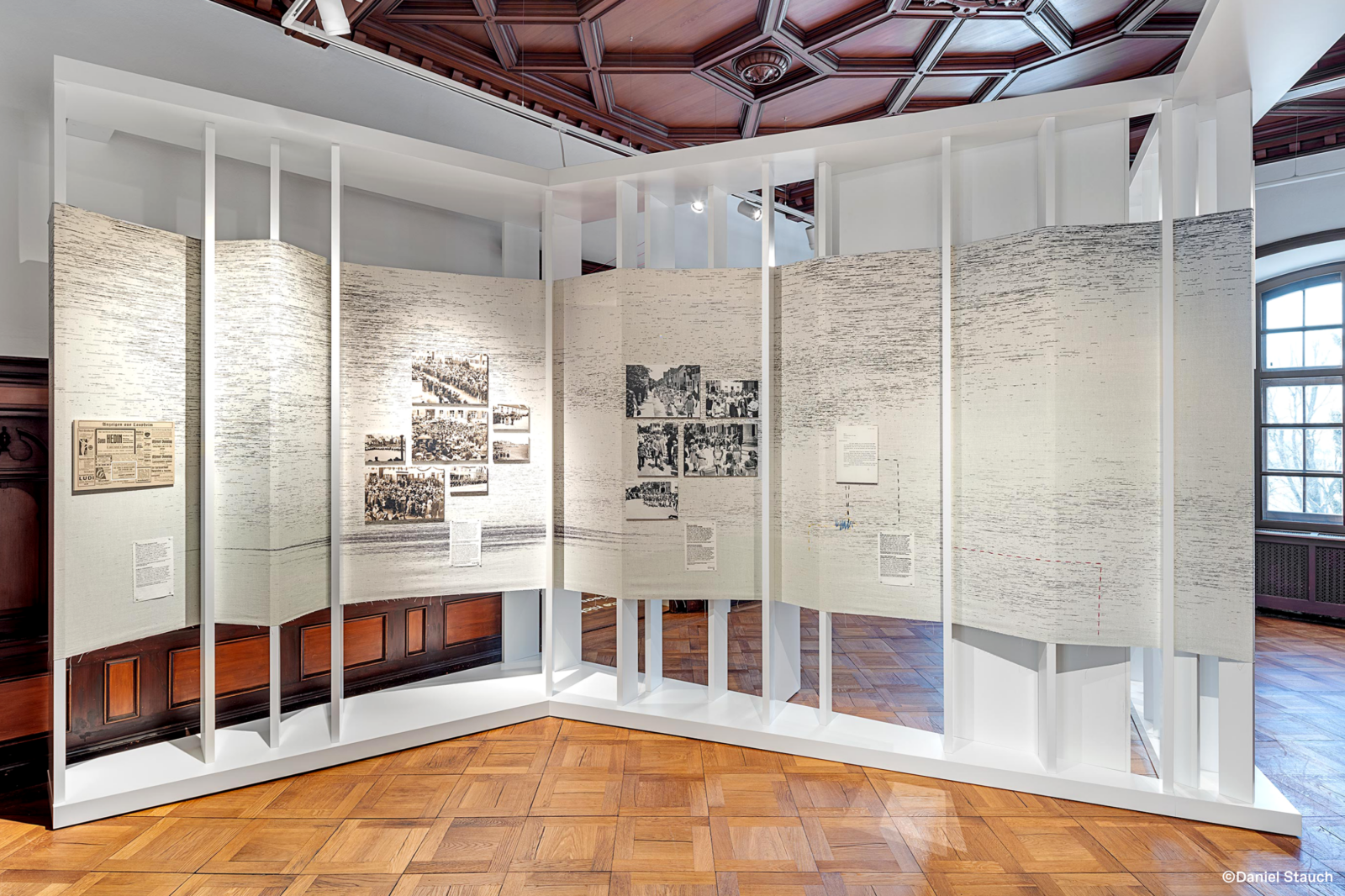

With the fire of the synagogue, through whose image the visitors inevitably have to leave, the scenography changes radically: Behind it are only charred remains of the Jewish assembly house, the ribbon of solidarity — the history of the relationship is finally torn down. This becomes clear in the photographic project installation, on which the Jewish citizens “disapper” in contemporary group photos and an oppressive emptiness is created. This emptiness is driven to the visual and tactile tip in the following space, the white, infinite, round archive. Only through the active opening of various doors do the exhibits of robbery in Laupheim, the Aryanization, the expulsion and extermination become apparent.
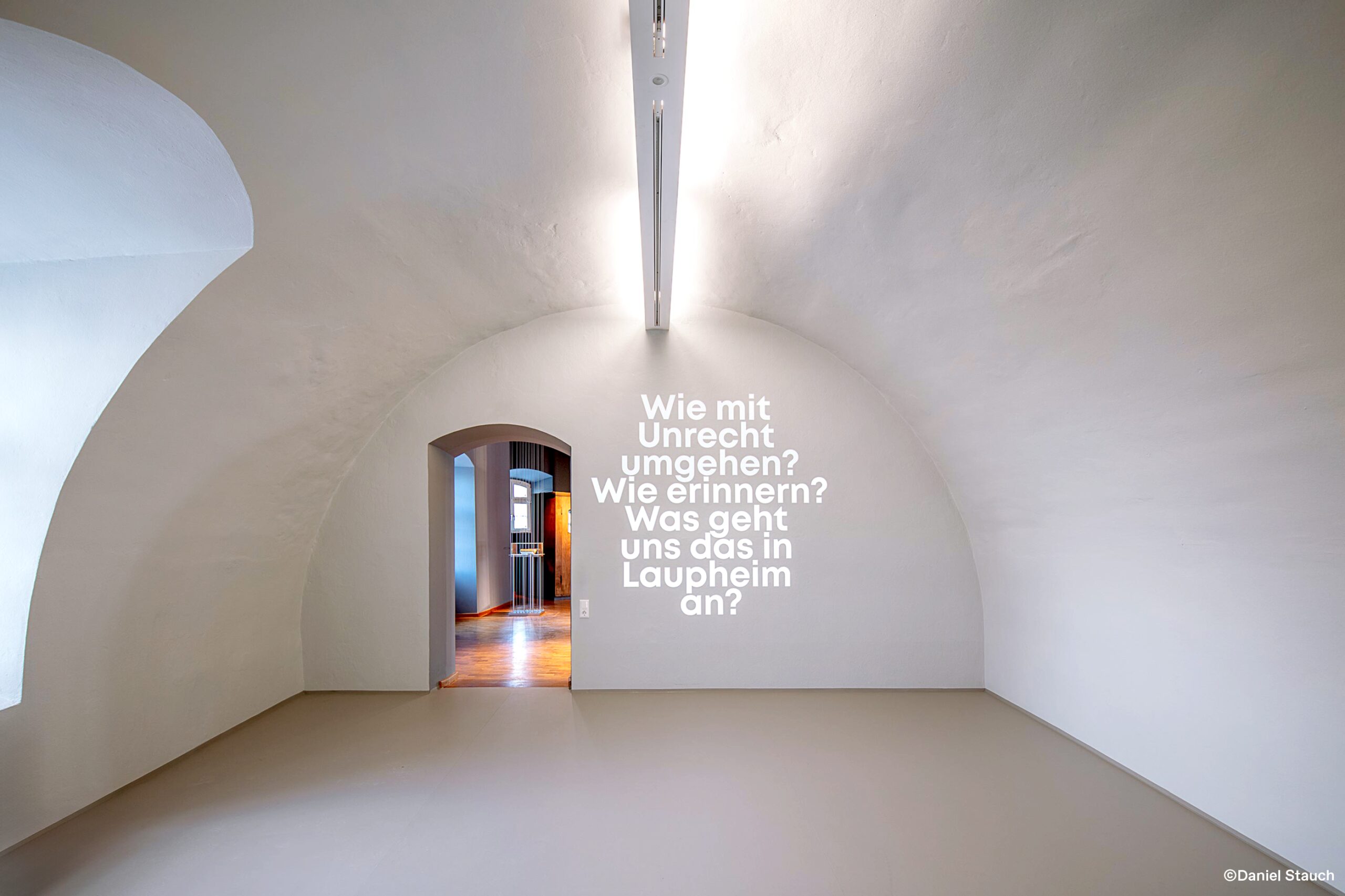
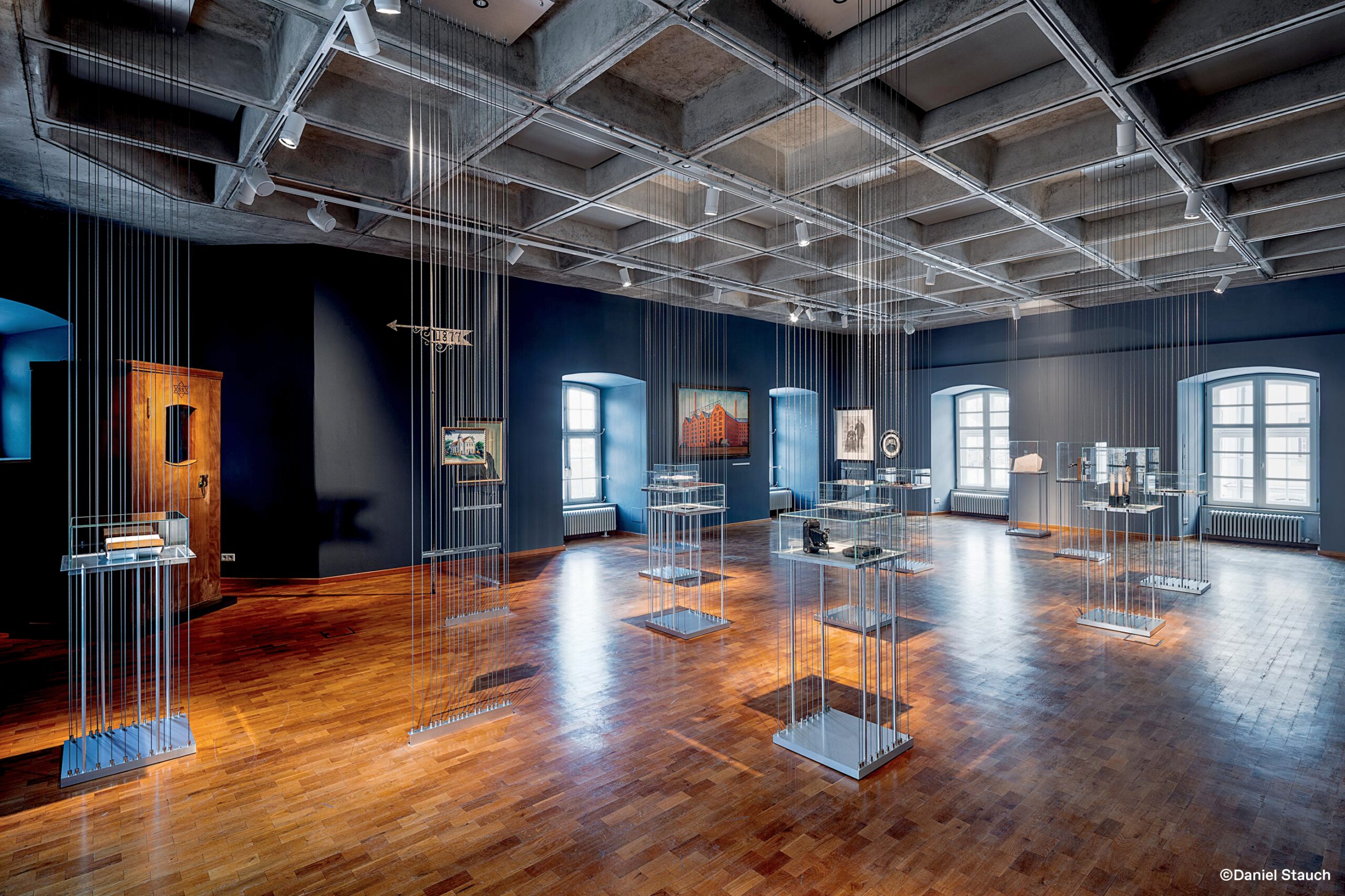
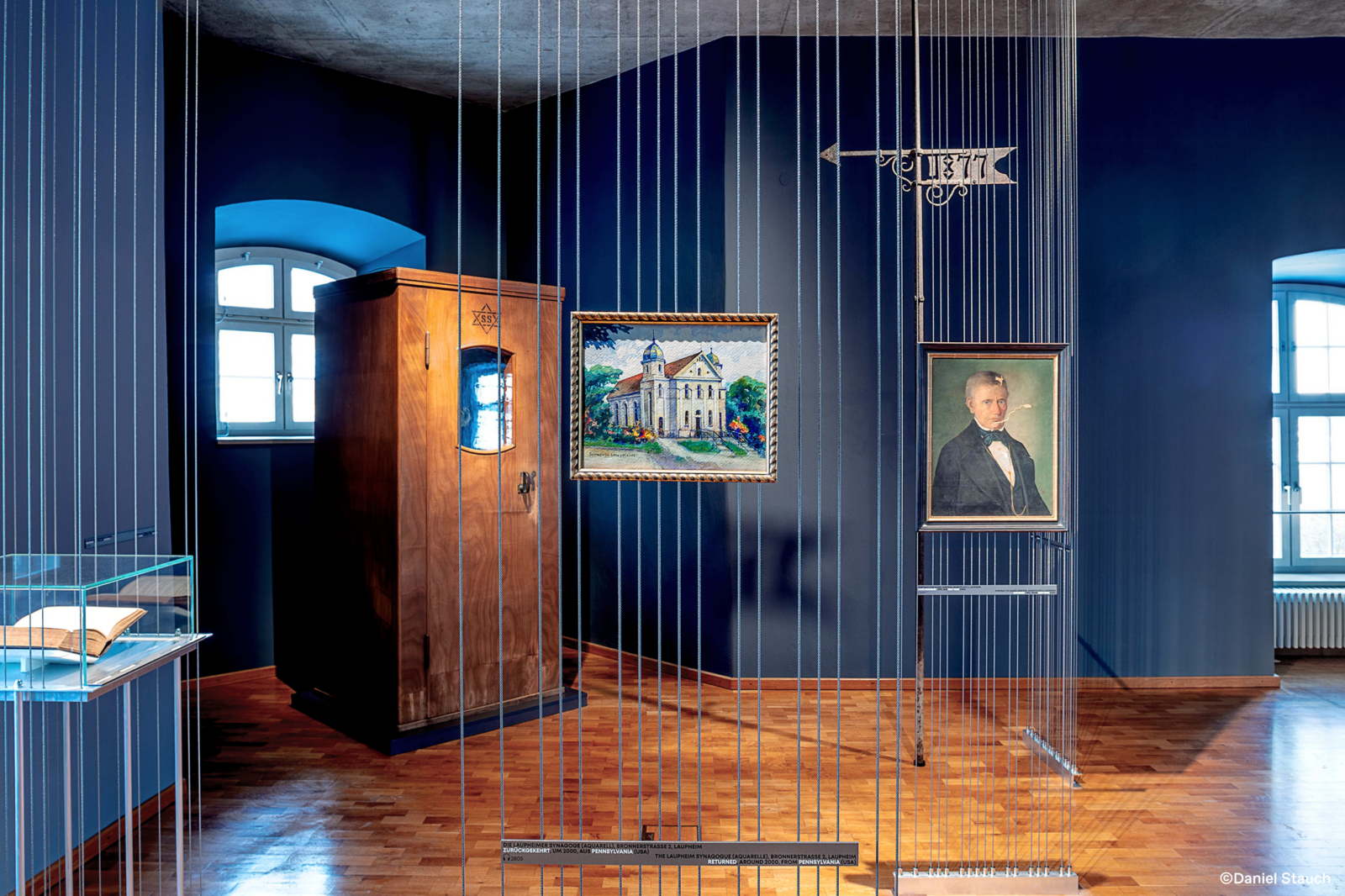
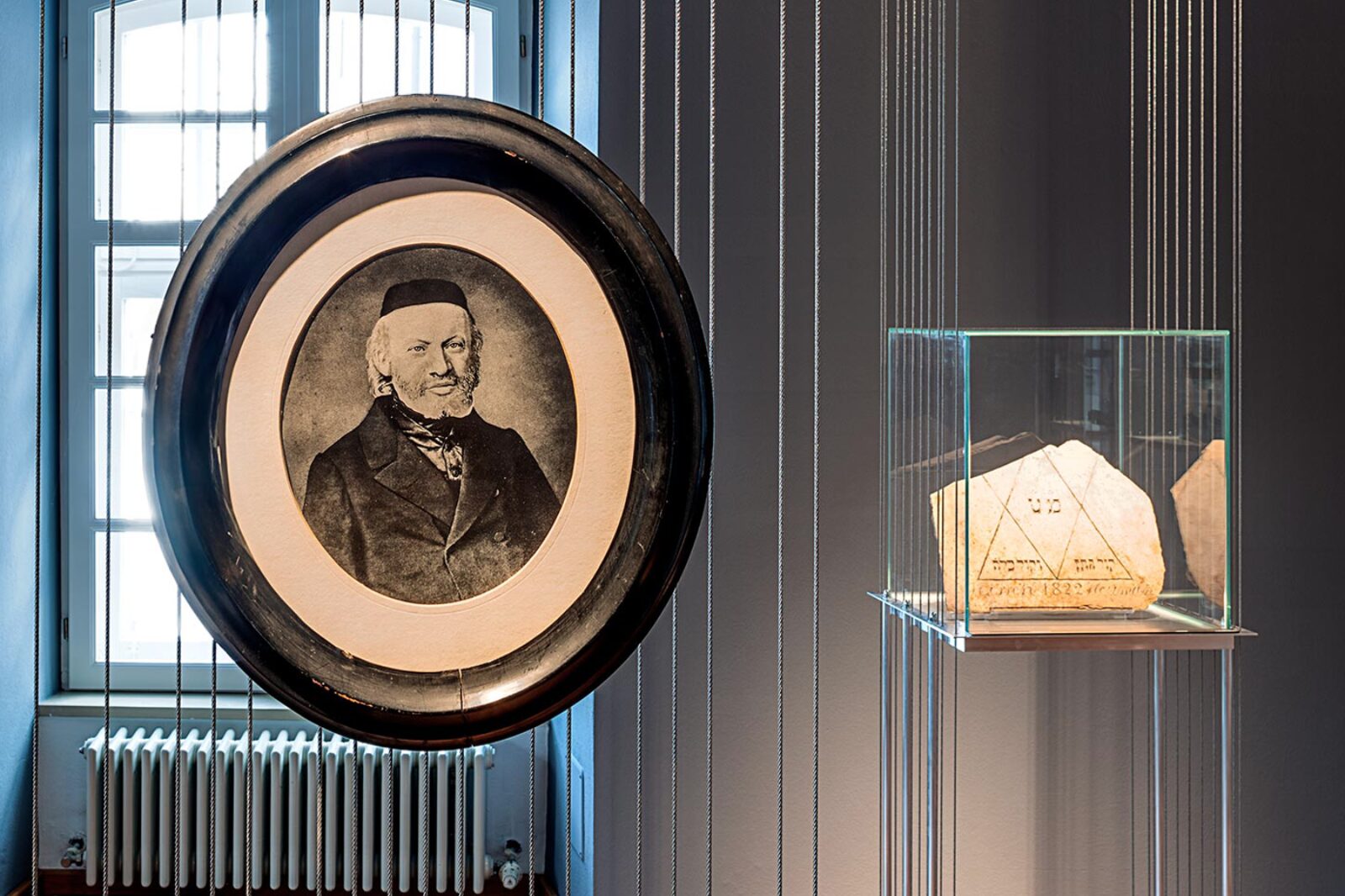
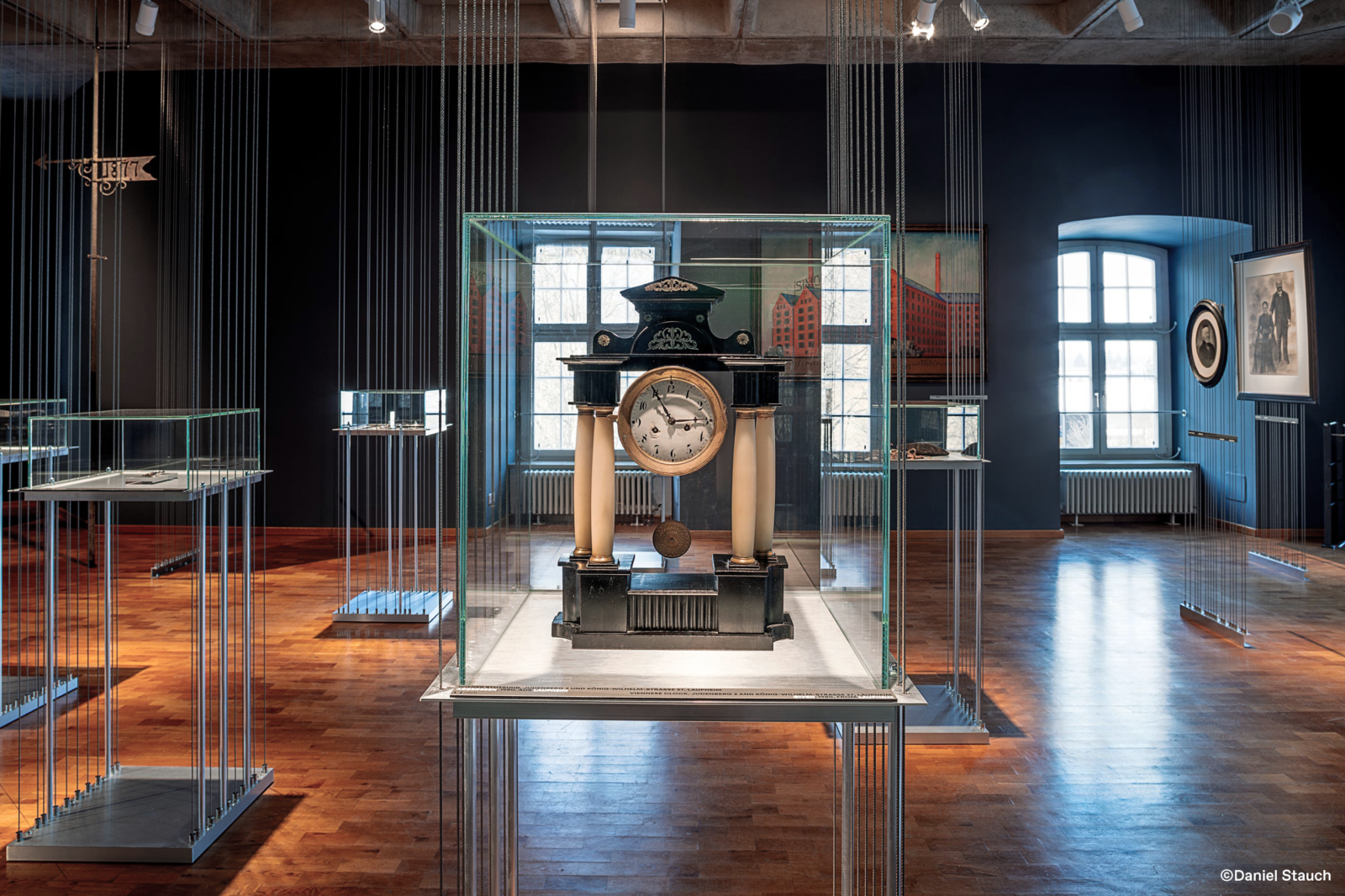
Through a long, again empty and only projected quotations from correspondence and speeches of the years 1948 – 1988 filled first post-war space, which describes the speechlessness and weighing strategies of the authorities and an amazing re-accoming in the 1980s, the visitors finally get to the last, probably also key room of the newer “relationship history” of Laupheim. In this part of the castle used to be the heavy boilers of the associated brewery. The now exposed concrete grid ceiling points to this functional background and is at the same time the “background” for a very own staging of so-called object witnesses: exhibits of Jewish life that have come back to Laupheim in a mostly unusual way. Keeping them mounted not on pedestals, but in the suspension of steel cables from the ceiling to the floor, shows their still volatile, not yet reconciling existence.

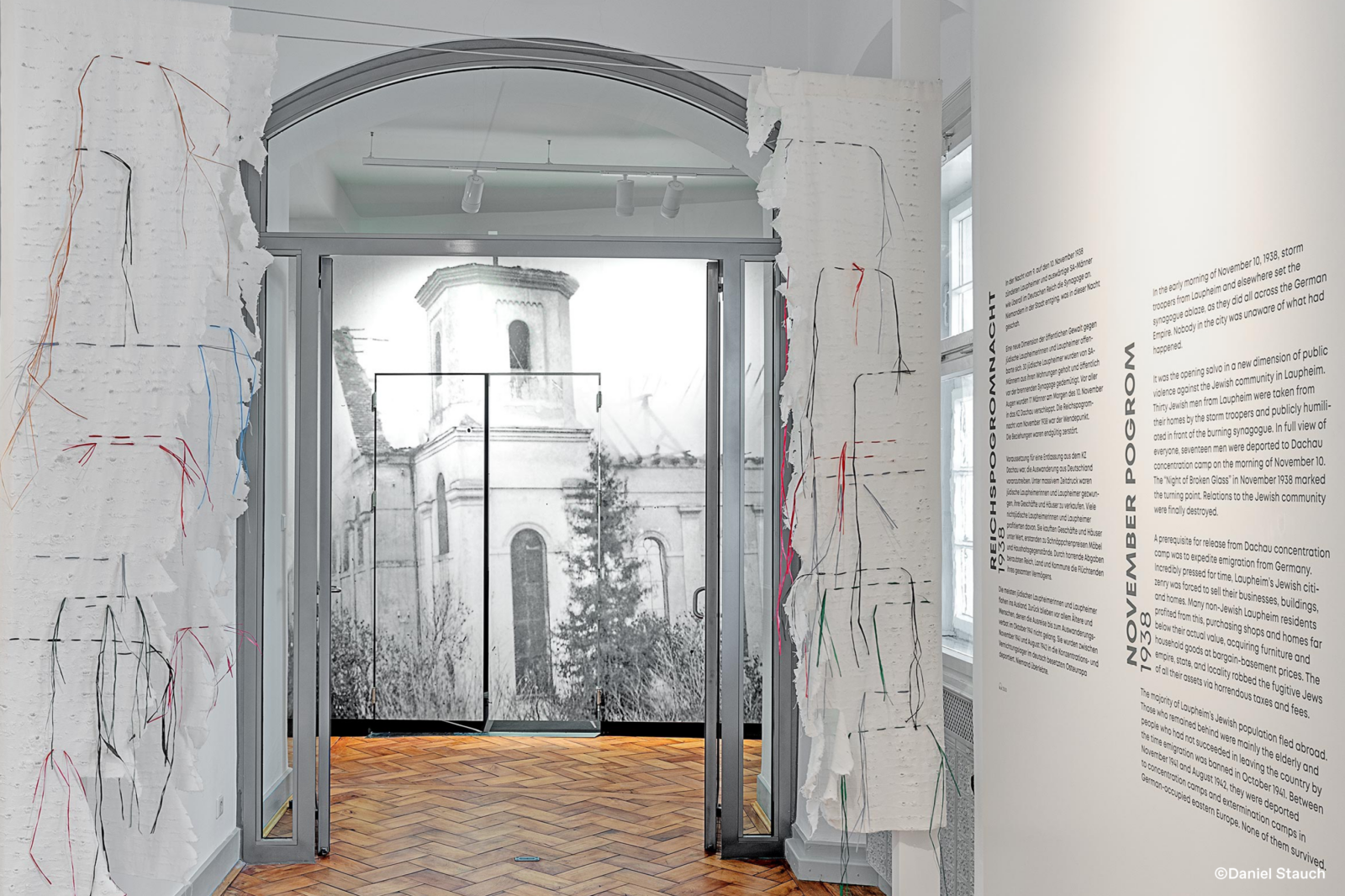

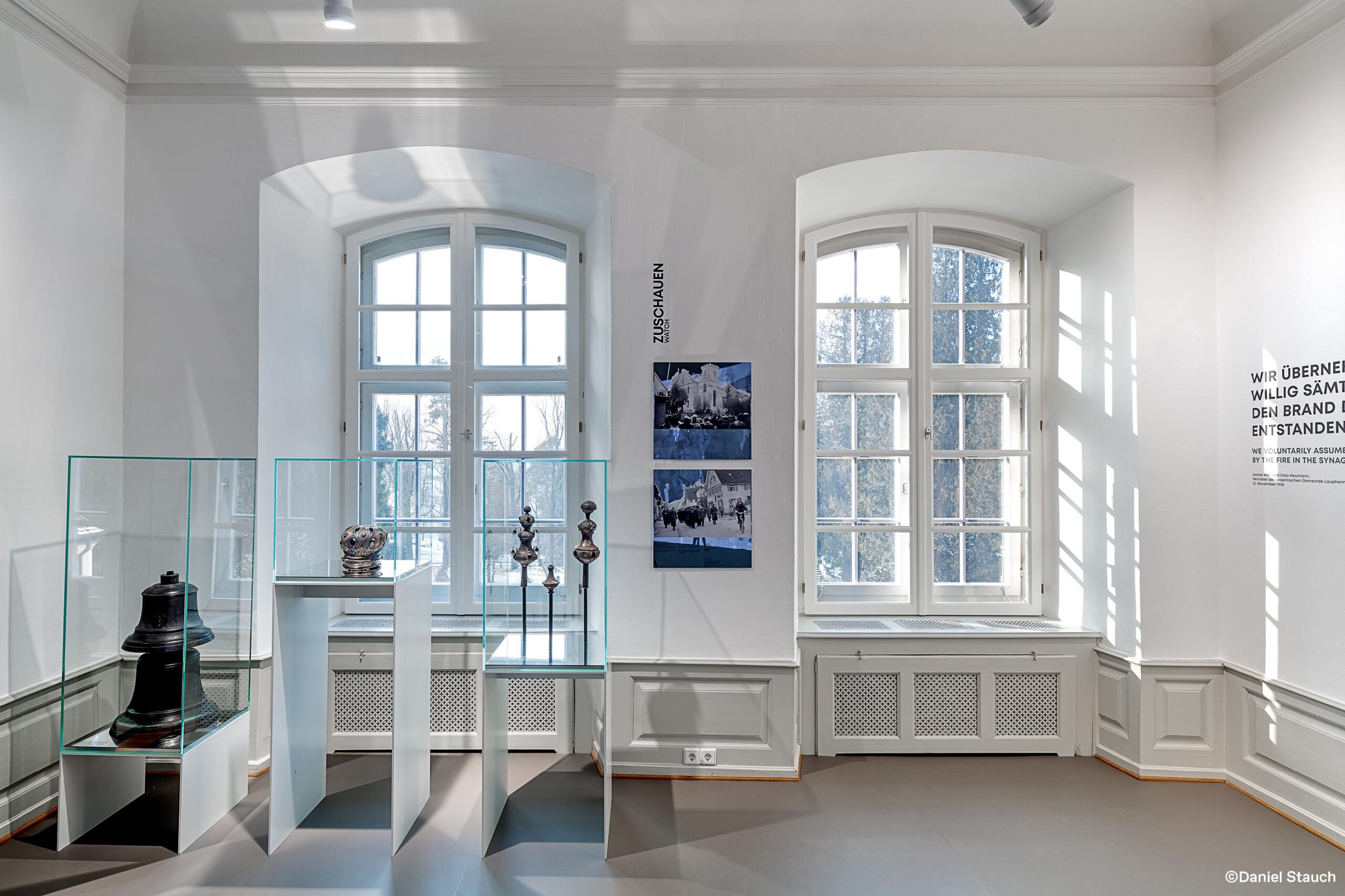
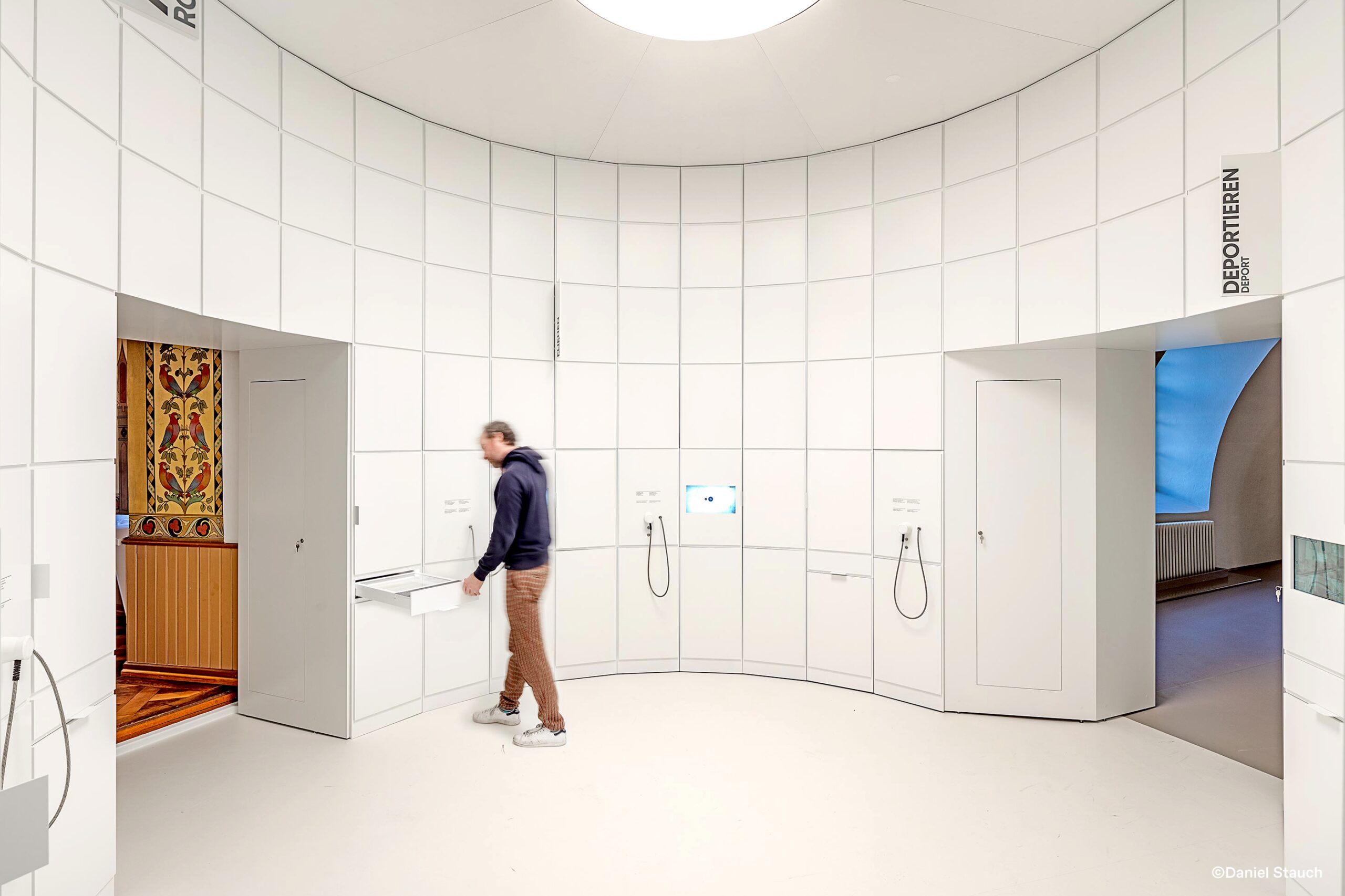
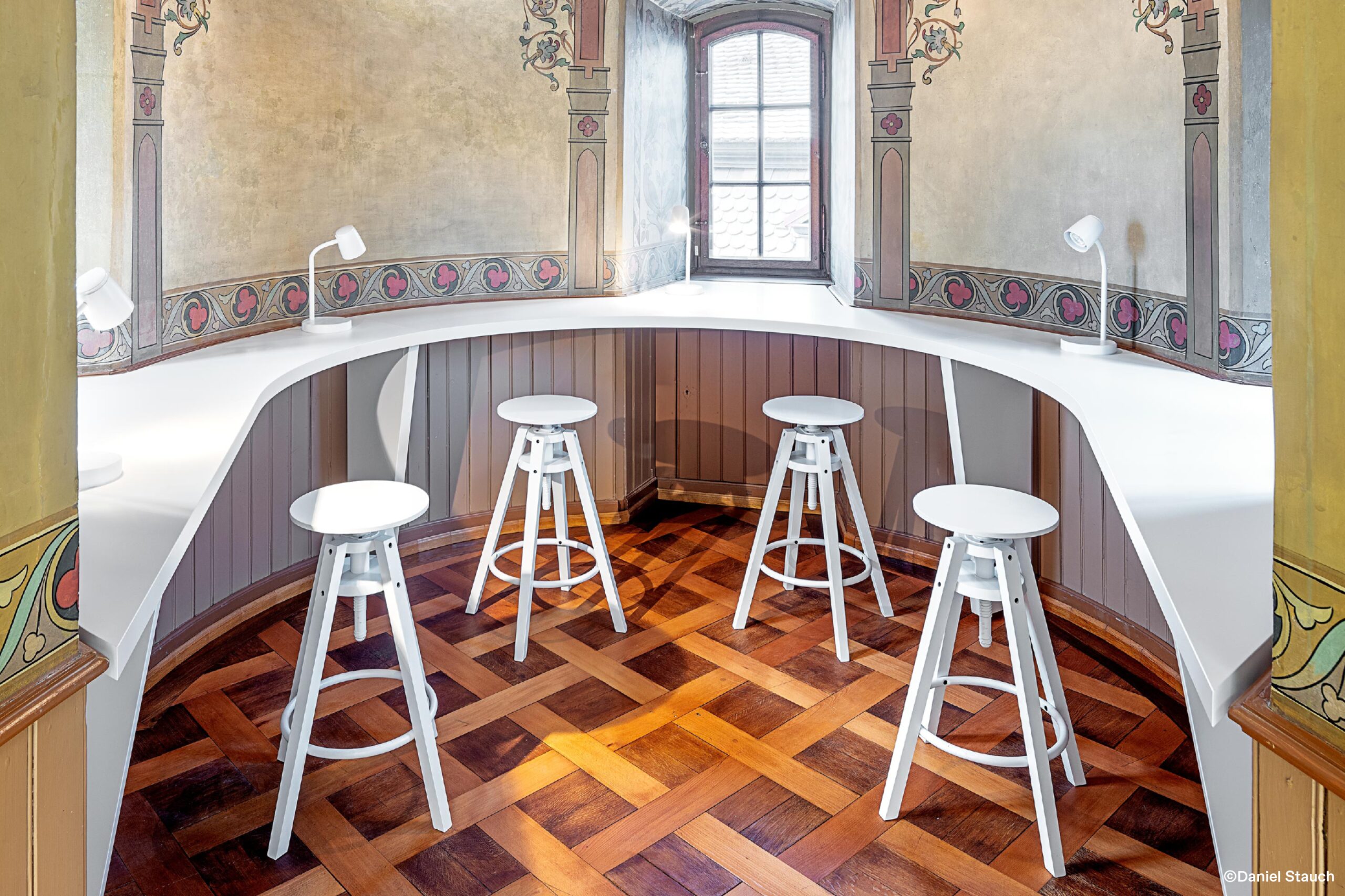
In this room, a veritable theatrical situation unfolds for the visitors seated in the long audio niche. Through a combination of audio contributions with the corresponding exhibits, these items are further highlighted through controlled lighting, each time presenting entirely new stories and contexts. The object witnesses are subtly given a voice in this way, providing information about objects frequently anonymously donated in Laupheim or contributed by surviving families. With these object witnesses, a compelling invitation is extended by making them spatially and sensually tangible. The active remembrance of the over 300 years of Jewish-Christian relations in Laupheim serves as both an obligation and a plea for an open culture of coexistence in a diverse society.
As visitors leave the exhibition, the white cords in the staircase invite them to become personally involved in the fabric of a diverse society and an active narrative of memory and relationships.


chezweitz GmbH, museale und urbane Szenografie, Berlin
Dr. Sonja Beeck, Detlef Daiber-Weitz
Barbara Weinberger, Jan Stauf, Sara Omassi, Claudia Besuch, Luiz Dominguez, Danielle Gringmuth, Julia Neller, Darius Samek, Lars Weitemeier
Barbara Weinberger, Jan Stauf, Sara Omassi
Claudia Besuch, Luiz Dominguez, Danielle Gringmuth, Julia Neller, Darius Samek
Lars Weitemeier
Prof. Dr. Paula Lutum-Lenger
Dr. Michael Niemetz
Dr. Cornelia Hecht-Zeiler
Mona Kuschel mit Team I couture real, Berlin
Andree Volkmann, Berlin
Carsten Golbeck, Berlin
Envue Homburg Licht GmbH, Berlin
Schreinerei Langner, Sondershausen
Eicher Werkstätten GmbH, Kernen im Remstal
Big Image Systems GmbH, Potsdam
Daniel Stauch
Matthias Hamann/chezweitz